





How much do humidity and temperature really affect lash work?
 Kru May
Maison du Cil Thailand · 14 September 2026
Kru May
Maison du Cil Thailand · 14 September 2026
In this article
What actually cures lash adhesive The right range When humidity is too high (over 65%) When humidity is too low (under 40%) Temperature, the part people forget more often The one thing worth buying today In shortSome days the work comes out beautifully, and some days you do everything exactly the same and the lashes just won't stick. A lot of artists conclude their hands were “off” that day, when what actually changed was the air in the room.
Thailand is one of the places in the world where this matters most, because the humidity outside is very high while the air conditioning we run all day pulls that moisture back out. The result is that a Thai artist's room can swing from 35% to 75% within the same week.
What actually cures lash adhesive
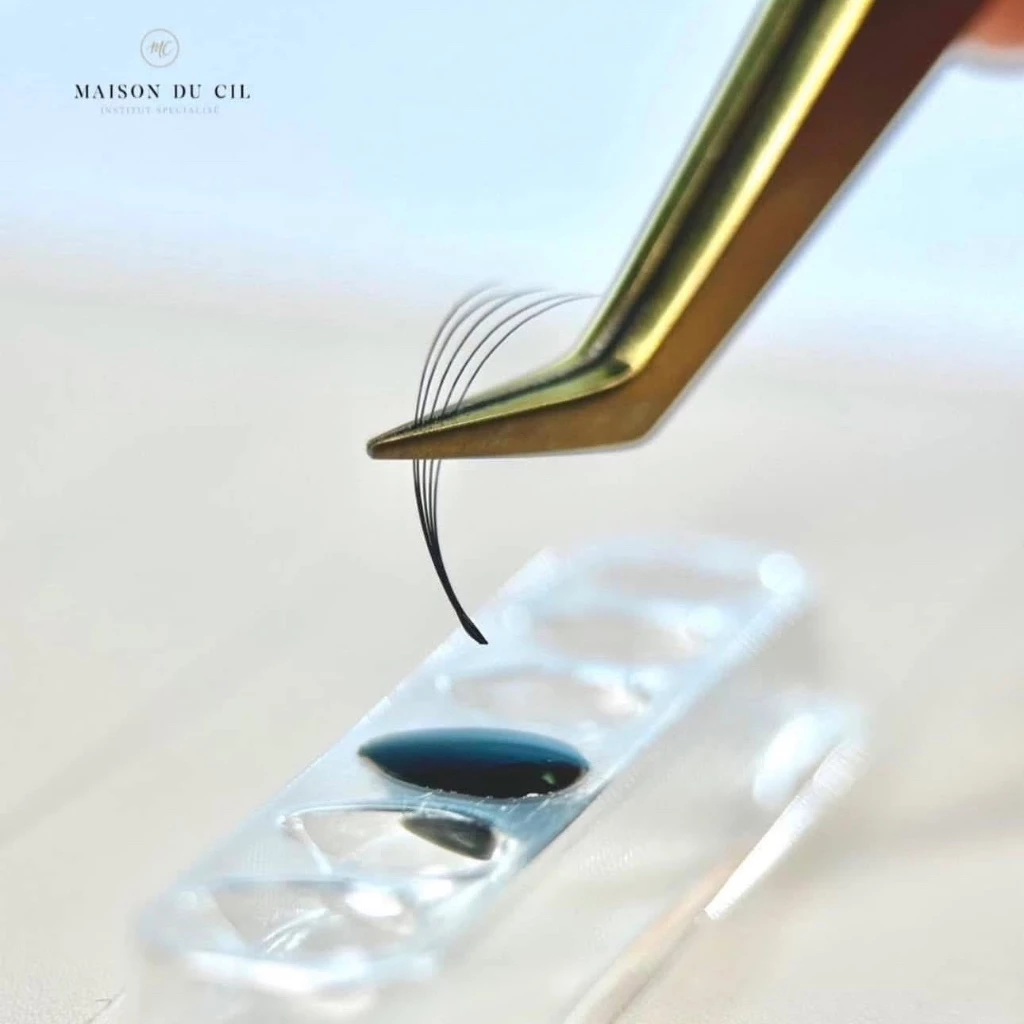
Almost every brand of lash adhesive is based on cyanoacrylate, which has one unusual property: it doesn't dry by evaporation — it cures on contact with moisture.
That's why the glue is so sensitive to the air. Water molecules in the air are what trigger the reaction. The more water in the air, the faster the reaction happens.
Which means the setting time printed on the bottle is a figure measured under standard conditions, not the figure you'll actually get in your room.
The right range
For most adhesives, the range where they work best is
- Relative humidity 45–60%
- Temperature 20–24°C
Outside that range the glue still works, but its behaviour changes — and you need to know which way.
When humidity is too high (over 65%)
The glue sets faster than it should, sometimes twice as fast. A 1-second glue can effectively become 0.5 seconds.
What you'll notice
- White stringy threads of glue between the dip and the placement
- Extensions won't attach even though there looks to be plenty of glue
- The set looks good on day one, then comes away in clumps within the week
The cause is that the outside of the glue has already cured before you place. What touches the natural lash is a hard skin, not fresh adhesive.
How to handle it
- Put out a fresh drop more often — every 10 minutes instead of 20.
- Dip and place faster, and cut out the pauses in between.
- Take up less glue on the extension, since it will already be thicker than usual.
- If you're regularly over 70% humidity, consider dropping one step to a slower-setting glue.
When humidity is too low (under 40%)
This is the most common situation in a heavily air-conditioned room. The glue sets far more slowly than it should.
What you'll notice
- You have to hold each lash unusually long
- Extensions shift after you've let go
- Lashes stick to their neighbours in clumps
- Clients feel more stinging than usual, because the fumes stay in the air longer
How to handle it
- Use a small humidifier about 1–2 metres from the bed, not right next to the client's face.
- Turn the air conditioning slightly warmer. An overly cold room is the main cause of dry air.
- Use humidity-retaining glue pads, if you have them.
- Avoid blowing air at the lashes to speed up drying — it does the opposite.
Temperature, the part people forget more often
Temperature matters in two ways. First, it governs how much water the air can hold. Second, it directly affects the viscosity of the glue.
In a very cold room the glue thickens, the drop gets bigger, and you pick up more glue than you meant to — which brings you back to the bead problem that makes lashes fall early.
In a hot room the glue goes runny and flows easily, with a risk of it reaching the client's skin.
The one thing worth buying today
A digital hygrometer, a few hundred baht. Put it beside the bed at the same height as the client's face — not on a high shelf or near the air conditioner.
Then do this for two weeks
- Log the humidity and temperature at the start of every appointment.
- Log which glue you used.
- When the client comes back for a fill, log how many weeks the set lasted.
After that you'll have data on your own room, which is worth more than general advice from anywhere — including this article — because your room has conditions nobody else's has.
In short
If your work is inconsistent even though your technique hasn't changed, don't blame yourself or the glue first. Measure the air.
The artists who stay consistent all year round in Thailand aren't the ones with steadier hands. They're the ones who know what their room does and adjust to it.
Adhesive and working conditions is a core topic of the course The science of lash adhesive which opens this October. Sign up now for the launch price.
An online lash extension course with Kru May: learn anywhere, any time, with a French certificate and a support group that answers every question.
- Launch price
- 48 hours of early access
- A free lesson, soon
A question about your own work? Message Kru May on LINE Monday–Saturday, 10:00–19:00